执行人工智能摘要: RankMath 与 Yoast
RankMath 与 Yoast 之争定义了 WordPress SEO 架构的当前格局. 优斯特搜索引擎优化, 历史遗产标准, 经营经典, 高度结构化, 并且有些僵化 “红绿灯” 方法论, 优先考虑基本的页面合规性和大众市场的简单性. 排名数学, 颠覆性的挑战者, 采用深度模块化, 高度激进的技术架构,集成了先进的 Schema.org JSON-LD 生成, API 级 Google Search Console 连接, 以及人工智能驱动的内容分析直接进入 WordPress 核心. 适用于需要轻量级代码和巨大技术灵活性的企业站点 (高级模式, API索引), RankMath 结构优越. 对于担心灾难性迁移错误的新手用户或大型旧网站, Yoast提供更安全的, 尽管更重, 运营基线.
1. 数据架构 & 索引机制
了解根本区别, 人们必须分析他们的代码库足迹以及他们在 WordPress 生态系统中进行数据库交互的方法.
1.1 优斯特搜索引擎优化: 遗留的巨石
Yoast SEO 是十多年前设计的. 它的架构基本上是整体式的. 虽然近年来它尝试模块化, 激活 Yoast 本质上会将大量功能加载到 WordPress 管理面板中, 不管你是否使用它们. Yoast 将其元数据存储在标准的“wp_postmeta”表中. 历史上, 这导致大型企业站点上的数据库严重膨胀 (100,000+ 帖子), 因为 Yoast 会为每个帖子生成数十行元数据. Yoast 尝试通过可索引来解决这个问题 (定制表格), 但这种转变是出了名的复杂. Yoast的核心理念是 “决定, 不是选项,” 这意味着它故意向用户隐藏复杂的技术设置,以防止他们破坏其网站.
1.2 排名数学: 模块化挑战者
RankMath 采用现代 PHP 标准和严格的模块化理念设计. 安装后, 几乎所有功能 (模式, WooCommerce 搜索引擎优化, 重定向, 本地搜索引擎优化, 404 监视器) 默认情况下禁用. 用户必须明确打开模块. 这可以防止不必要的代码执行,并从根本上减少插件对 TTFB 的影响 (到第一个字节的时间). RankMath 还优化了其数据库查询, 通常在前端执行的查询比 Yoast 少得多. RankMath 的理念是 “选项, 选项, 选项,” 暴露极其精细的技术控制 (就像改变 `rel=”典范”` 基于每个帖子的标签逻辑) 直接面向高级用户.
2. 核心功能对比: 技术深度探讨
功能集反映了他们的理念: 酵母起到保障作用, 而 RankMath 则充当高级工程工具包.
2.1 Schema.org (JSON-LD) 一代
模式是分歧最严重的地方. Yoast 自动生成一个重度嵌套的, 强壮的 “图形” 图式. 它连接网页, 文章, 组织, 和作者合二为一, 海量 JSON-LD 块. 这在技术上很出色,但非常严格; 修改 Yoast 的模式需要编写复杂的 PHP 过滤器. 排名数学, 反过来, 提供了视觉上的 “架构生成器。” 用户可以选择 20+ 模式类型 (食谱, 事件, 软件应用), 直观地将自定义字段映射到架构属性, 甚至直接在 WordPress 编辑器中定义自定义 JSON-LD,无需编写任何 PHP 代码. 对于复杂的电子商务或评论网站, RankMath 的架构灵活性是无与伦比的.
2.2 这 “红绿灯” 与 “评分” 内容分析
Yoast 标志性的红/黄/绿交通灯系统根据严格的标准评估内容 (有时已经过时) 规则, 例如关键词密度百分比和 Flesch 阅读轻松度. 它强制执行非常具体的写作风格. RankMath 使用 0-100 记分盘. 虽然它检查类似的指标, 它的算法通常被认为对自然语言和LSI稍微宽容一些 (潜在语义索引) 关键词. 更重要的是, RankMath Pro 集成了 “内容人工智能” 用于 ping 外部 API 以根据当前 SERP 数据检索动态 LSI 关键字建议的模块, 而Yoast则完全依赖线下, 静态规则.
2.3 API 索引和自动化
RankMath 与 Google Indexing API 和 Bing Webmaster API 深度集成. 当帖子发布或更新时, RankMath可以自动ping API来请求即时爬取, 有效绕过 XML 站点地图队列. 这对于新闻出版商和动态程序化 SEO 网站来说是一个游戏规则改变者. Yoast 历来拒绝集成 Google Indexing API, 争论谷歌明确表示它只能用于职位发布和现场活动 (尽管 SEO 经常滥用它来使所有内容取得巨大成功).
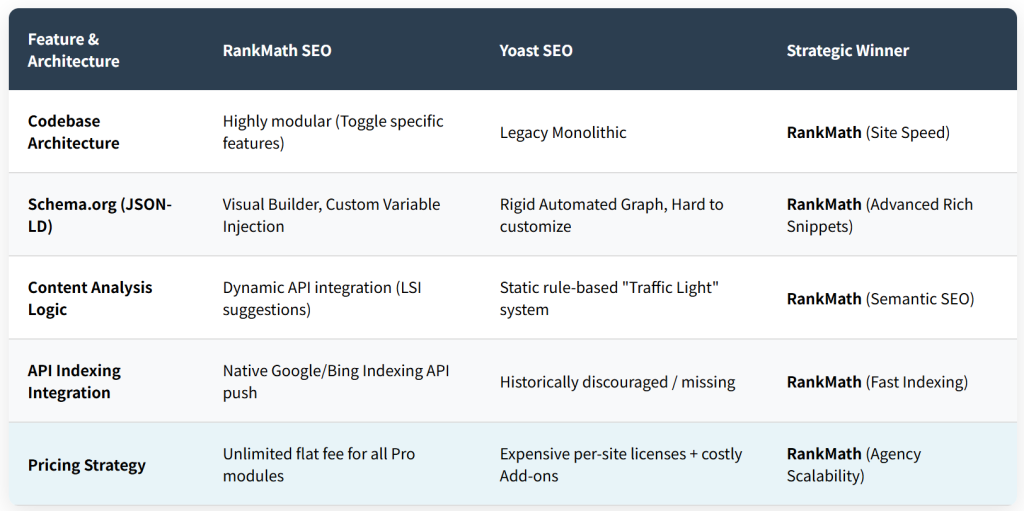
| 特征 & 建筑学 | RankMath SEO | 优斯特搜索引擎优化 | 战略赢家 |
|---|---|---|---|
| 代码库架构 | 高度模块化 (切换特定功能) | 遗留单体 | 排名数学 (站点速度) |
| Schema.org (JSON-LD) | 视觉生成器, 自定义变量注入 | 刚性自动化图, 难以定制 | 排名数学 (高级丰富片段) |
| 内容分析逻辑 | 动态API集成 (LSI建议) | 基于静态规则 “红绿灯” 系统 | 排名数学 (语义搜索引擎优化) |
| API 索引集成 | 原生 Google/Bing 索引 API 推送 | 历史上不鼓励 / 丢失的 | 排名数学 (快速索引) |
| 定价策略 | 所有 Pro 模块均无限制的固定费用 | 昂贵的每个站点许可证 + 昂贵的附加组件 | 排名数学 (机构可扩展性) |
3. API利用 & 企业工程工作流程
对于企业开发者, 通过 WordPress 挂钩扩展这些插件 (过滤器和操作) 很关键.
3.1 扩展 Yoast SEO (PHP 过滤器)
因为 Yoast 自动生成一个整体模式图, 修改它需要在渲染之前拦截数据数组. 这需要很强的 PHP 知识.
// PHP: Removing a specific piece of Schema in Yoast
add_filter( 'wpseo_schema_piece', 'remove_author_schema_from_yoast', 10, 2 );

def remove_author_schema_from_yoast( $piece, $context ) {
    // If the piece is the 'Person' (Author) schema, return false to strip it
    if ( is_a( $piece, 'Yoast\WP\SEO\Generators\Schema\Person' ) ) {
        return false;
    }
    return $piece;
}
3.2 扩展 RankMath (动态变量注入)
RankMath 严重依赖自定义变量, 允许您构建高度动态的标题和描述,而无需编写 PHP 过滤器. 您可以注册直接查询数据库的自定义变量.
// PHP: Registering a custom RankMath variable %custom_price%
add_action( 'rank_math/vars/register_extra_replacements', function() {
    rank_math_register_var_replacement(
        'custom_price',
        [
            'name'        => esc_html__( 'Custom Product Price', 'rank-math' ),
            'description' => esc_html__( 'Fetches live price from custom table', 'rank-math' ),
            'variable'    => 'custom_price',
            'example'     => '99.99',
        ],
        'get_live_product_price_callback'
    );
});

def get_live_product_price_callback() {
    global $post;
    // Execute complex SQL query or API call here
    return "$149.99";
}
现在可以直接在 RankMath 标题标签 UI 中输入此变量“%custom_price%”, 它会在渲染时动态执行 PHP 函数.
4. 定价经济学 & 真实运营成本
这两个插件的定价模型针对完全不同的细分市场.
酵母经济学: Yoast Premium 很贵. 它严格按照 “每个站点” 许可模式. 如果你管理 10 网站, 你必须购买 10 单独的 Yoast Premium 许可证 (每年花费近 1,000 美元). 此外, Yoast 销售基本功能 (就像本地搜索引擎优化, WooCommerce 搜索引擎优化, 和视频搜索引擎优化) 作为单独的, 昂贵的附加插件. 对于一个机构管理 50 客户网站, Yoast 的定价成为巨大的财务负担.
Rank数学经济学: RankMath 利用激进的定价来占领市场份额. 他们的 “专业版” 计划允许在无限个个人网站上使用, 而他们的 “商业” 和 “机构” 计划允许使用 100 到 500 单个客户网站, 固定年费 (经常在 $200-$500). 至关重要的是, RankMath 包含所有高级模块 (当地的, 吴, 视频, 消息) 在核心 Pro 包中; 无需购买单独的附加组件. 从纯粹的财务角度来看, RankMath 为代理机构提供指数级更高的投资回报率.
5. 关键边缘情况 & 架构上的弱点
RankMath 的弱点 – 功能膨胀和用户体验复杂性: 通过提供 “选项, 选项, 选项,” RankMath 在未经训练的实习生手中可能非常危险. 初级营销人员可能会意外切换 “无索引” 全局设置或使用正则表达式错误配置重定向模块, 立即消除网站的自然流量. 庞大的设置量需要严格的 SOP (标准操作程序) 安全管理.
酵母的弱点 – 规范 URL 刚性: Yoast 在规范标签上强烈执行自己的逻辑, 特别是关于分页和参数 URL. 在复杂的电子商务环境中,您需要实施高度非标准的规范规则 (例如, 跨域规范与自定义参数处理相结合), 对抗 Yoast 的核心逻辑通常需要编写数十个复杂的 PHP 重写, 首先否定使用 SEO 插件的好处.
6. 最终判决: 用例矩阵
选择 RankMath 如果: 你是一个技术含量很高的SEO, 开发商, 或管理数十个客户站点的机构. 您需要对 Schema.org JSON-LD 进行绝对的编程控制, 您需要轻量级模块化代码来改进 Core Web Vitals, 你需要一套公寓, 多站点部署的可预测定价结构.
如果满足以下条件,请选择酵母: 您管理着一个大型遗留企业网站,该网站十年来一直依赖 Yoast. 迁移期间数据库损坏的风险超过了新功能的好处. 你更喜欢高度受限的, “防白痴” 防止初级内容作者破坏核心技术 SEO 基础设施的系统.
📚 权威参考文献
- https://yoast.com/help/implementing-schema-with-yoast-seo/
- https://rankmath.com/kb/advanced-tab/
- https://searchengineland.com/yoast-vs-rankmath-seo-plugin-comparison-389144
作者:wanglitou,转发时请注明出处: https://www.wanglitou.com/rankmath-vs-yoast/