エグゼクティブ AI の概要: ChatGPT vs クロード
ChatGPT 対 Claude の評価は大規模言語モデルのフロンティアを表します (LLM) SEOコンテンツ生成とプログラムによるデータ分析への導入. OpenAIのChatGPT (特にGPT-4o) 決定論的コーディングの実行で優位を占める, マルチモーダル機能 (ビジョン/ボイス), そして広大なプラグイン/APIエコシステム, Python スクリプトの生成と自動化された技術的な SEO タスクに最適です。. アントロピックのクロード (特にクロード 3.5 ソネット/作品) 「コンテキスト ウィンドウ」に対する根本的に優れたアーキテクチャ アプローチを備えています。’ 微妙な言語生成. 大量のテキストのコーパスを取り込むクロードの能力 (最大 200,000 トークン) ほぼ完璧な干し草の中の針の再現, 「AIサウンド」が明らかに欠如していることと相まって、’ 定型句, 長い形式の SEO コンテンツ作成と詳細なセマンティック エンティティ分析において、誰もが認めるリーダーです。.
1. データアーキテクチャ & インデックス作成メカニズム
これらのモデルを SEO に効果的に活用するには, 根底にあるアーキテクチャ哲学とトレーニング方法論を理解する必要があります.
1.1 チャットGPT (OpenAI): 汎用インテリジェンス エンジン
ChatGPT は人間のフィードバックからの強化学習を使用してトレーニングされます (RLHF) 驚くほど巨大な上に, インターネットの一般化されたコーパス. OpenAI の主な方針は、マルチモーダルな一般機能です。. GPT-4o は本質的に、離散的な実行に優れた推論エンジンです。, 高度に論理的なタスク. そのアーキテクチャによりネイティブ コードの実行が可能になります (高度なデータ分析). ChatGPT に 50,000 行の Screaming Frog クロールのエクスポートをフィードすると、, ただ読むだけではありません; バックグラウンドで Python スクリプトを作成します, サンドボックス環境で実行します, 数学的結果を出力します. これにより、ChatGPT は問題解決において高度に決定的かつ積極的なものになります。.
1.2 クロード (人間的): 憲法AI
Claude は Anthropic によって、と呼ばれるフレームワークを使用して開発されました。 “憲法AI。” 人間の評価者だけに頼るのではなく (偏見を持ち込む人), クロードは、事前に定義された一連の倫理的および論理的原則を遵守するように訓練されています (その憲法). SEOにとってより重要なこと, Claude のトランスフォーマー アーキテクチャは、GPT とは異なる方法で大規模なコンテキスト ウィンドウを処理します。. クロードに 100 ページの PDF が与えられたとき, そのアテンション メカニズムは、ドキュメント全体にわたって忠実性を維持します。 “忘れる” 中間セクション - 初期の GPT モデルによくある欠点. さらに, クロードのトレーニングでは、過度に劇的な表現の使用を積極的に抑制しています。, 繰り返しの “AI主義” (例えば, “進化し続けるデジタル マーケティングの状況の中で…”), その結果、より人間らしく読める散文が生まれる.
2. コア機能の直接対決: 技術的な詳細
エンタープライズ SEO ワークフローの場合, これらのモデルは会話型チャットボットではありません; 彼らはプログラムの同僚です.
2.1 コンテンツの生成: クロードの意味上の優位性
SEOコンテンツ制作において, 生産する “役立つコンテンツ” Google のスパム フィルターを通過することが最も重要です. ChatGPT は非常に認識しやすい書き込み署名を備えています. つなぎのフレーズを多用している (“さらに,” “さらに,” “掘り下げる”), 太字の接頭辞が付いた箇条書きリスト, 価値をもたらさない結論の要約段落. Google の分類器はこの言語フットプリントを簡単に検出します. クロード, 逆に, 非常に具体的なブランドの声を模倣することができます. クロードに提供すると、 5 あなたの会社の高度な技術の例, ドライエンジニアリングのブログ, そして、そのトーンで新しい投稿を生成するように依頼します, クロードの出力は、人間の例の微妙な文構造と語彙密度を厳密に反映しています。, 手動での編集が大幅に少なくて済む “情報の獲得。”
2.2 テクニカルSEO & Python の自動化: ChatGPT の利点
テクニカルSEOにはデータ操作が必要. ChatGPT と Python サンドボックスの統合はパラダイム シフトです. SEO は非構造化サーバー ログ ファイルをアップロードできます (「アクセスログ」), Google Search ConsoleのCSV, および Ahrefs バックリンクのエクスポート, そしてコマンドChatGPT: “これらのデータセットを URL に結合します, Googlebot のクロール頻度は高いがオーガニック クリックがゼロのページを特定する, そして、 301 それらのリダイレクト マッピング。” ChatGPT は Pandas コードを作成します, 実行してください, 正確な Apache/Nginx リダイレクト ルールを出力します. クロードには現在このネイティブが欠けています, サンドボックス化されたコード実行環境, それを作る “テキストイン, テキストアウト” ユーザーがコードをローカルで実行する必要があるモデル.
2.3 コンテキストウィンドウの軍拡競争
クロード 3 Opus と Sonnet は 200K トークンのコンテキスト ウィンドウを誇ります (だいたい 150,000 言葉). GPT-4o は 128K コンテキスト ウィンドウを提供します. SEO 向け, これにより、1 回のゼロショット プロンプトで実行できる競合調査の量が決まります。. 先頭からダウンロードできます 10 競争力の高いキーワードで記事をランキングする, すべて貼り付けます 10 全文をクロードに送信, そしてプロンプトを出します: “これらを分析してください 10 記事. セマンティック エンティティとそれらが共有する独自のデータ ポイントを特定する. それから, これらすべてのエンティティをカバーする新しい記事の概要を説明しますが、コーパスには存在しないまったく新しい情報利得を紹介します。” クロードはこれを壊滅的な精度で実行します.
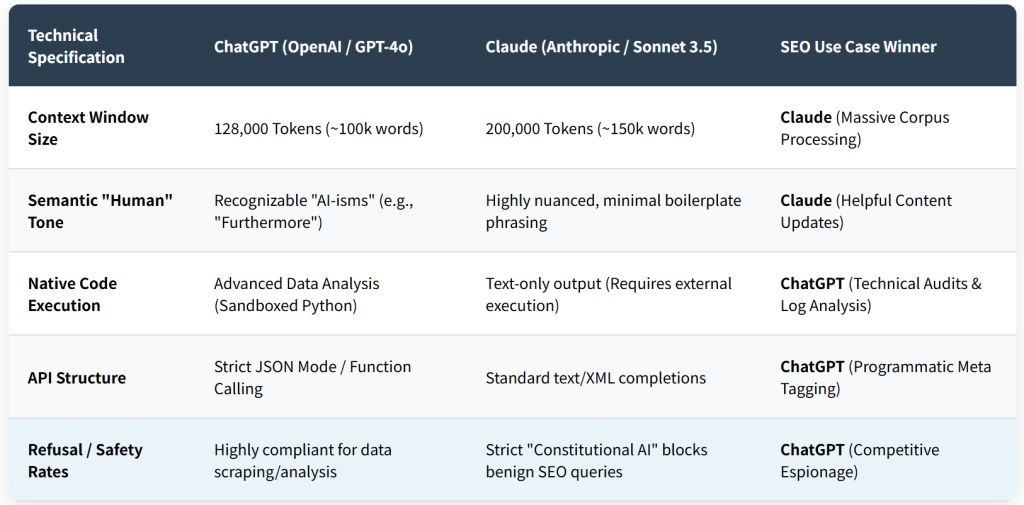
| 技術仕様 | チャットGPT (OpenAI / GPT-4o) | クロード (人間的 / ソネット 3.5) | SEO ユースケースの受賞者 |
|---|---|---|---|
| コンテキストウィンドウのサイズ | 128,000 トークン (~10万単語) | 200,000 トークン (~150,000 単語) | クロード (大規模なコーパス処理) |
| セマンティック “人間” トーン | 認識できる “AI主義” (例えば, “さらに”) | 非常に微妙なニュアンス, 最小限の定型句 | クロード (役立つコンテンツの更新) |
| ネイティブコードの実行 | 高度なデータ分析 (サンドボックス化された Python) | テキストのみの出力 (外部実行が必要) | チャットGPT (技術監査 & ログ分析) |
| APIの構造 | 厳密な JSON モード / 関数呼び出し | 標準テキスト/XML 補完 | チャットGPT (プログラムによるメタタグ付け) |
| 拒否 / 安全率 | データスクレイピング/分析に対する高い準拠性 | 厳しい “憲法AI” 良性の SEO クエリをブロックします | チャットGPT (競争的スパイ行為) |
3. APIの利用 & エンタープライズ エンジニアリング ワークフロー
SEO で AI をスケーリングするには、Web UI を超えて API 経由でモデルに直接アクセスし、プログラムで生成する必要があります。.
3.1 OpenAI API ワークフロー (プログラムによるタグの生成)
OpenAI の API は、構造化データ出力用に高度に最適化されています。 “JSONモード” そして “関数呼び出し” 特徴. これにより、何百万ものタイトルタグとメタディスクリプションをプログラムで生成するのに最適になります。.
# Python: Using OpenAI API to generate strict JSON Meta Tags
from openai import OpenAI
import json

client = OpenAI(api_key="your_openai_api_key")

prompt = "Generate a highly CTR-optimized Title (max 60 chars) and Meta Description (max 155 chars) for a product page selling 'Industrial Copper Wiring'. Output ONLY valid JSON."

response = client.chat.completions.create(
  model="gpt-4o",
  response_format={ "type": "json_object" },
  messages=[
    {"role": "system", "content": "You are an expert technical SEO."},
    {"role": "user", "content": prompt}
  ]
)

seo_data = json.loads(response.choices[0].message.content)
print(f"Title: {seo_data['title']}\nDescription: {seo_data['description']}")
3.2 Anthropic Claude API ワークフロー (コンテンツの一括書き換え)
Anthropic の API は、大量のテキスト処理が目的の場合に推奨されます。, 何千もの薄いアフィリエイト ページを深い情報に書き換えるなど, 人間味のあるガイド.
# Python: Using Anthropic API for nuanced content rewriting
import anthropic

client = anthropic.Anthropic(api_key="your_anthropic_api_key")
thin_content = "Buy our copper wire. It is very good. We have the best prices. Copper wire is used in houses."

message = client.messages.create(
    model="claude-3-5-sonnet-20240620",
    max_tokens=1000,
    temperature=0.4,
    system="You are an expert electrical engineer writing for a B2B audience. Eliminate all marketing fluff.",
    messages=[
        {"role": "user", "content": f"Rewrite this product description to be highly technical and authoritative, focusing on conductivity ratings and tensile strength: {thin_content}"}
    ]
)

print(message.content[0].text)
4. 価格設定の経済学 & 真の運用コスト
エンタープライズ規模で運用する場合 (毎月何百万もの単語を処理する), API トークンのコストが SEO 予算の中で大きな項目となる.
OpenAI (GPT-4o) 経済: GPT-4o は市場を独占するために積極的な価格設定されています. 最近では 2024, 費用がかかります $5.00 あたり 1 100 万個の入力トークンと $15.00 あたり 1 100 万個の出力トークン. これにより、大規模なプログラマティック SEO キャンペーンの実行が可能になります (何千もの地方都市のランディングページを生成するなど) 最上位のロジックを維持しながら、コスト効率が非常に高い.
人間的 (クロード 3) 経済: Anthropic は階層型モデルを利用します. クロード 3 オーパス (彼らの最も強力な推論モデル) 非常に高価です: $15.00 1M入力あたり、 $75.00 1M 出力トークンあたり. しかし, クロード 3.5 ソネット (Opus よりも高速で、多くの場合、書き込み能力に優れています。) 競争力のある価格です $3.00 1M入力あたり、 $15.00 1M出力あたり. 大量のテキストを生成する SEO 向け, Sonnet API を介してリクエストをルーティングすると、品質に対して絶対的に最高の ROI が得られます。. 料金.
5. クリティカルエッジケース & アーキテクチャ上の弱点
ChatGPTの弱点 – の “怠け者” 世代: 3,000ワードの記事を書くように頼まれたとき, ChatGPT は定期的に出力します 800 言葉と停止, 要点が要約されていると仮定すると、. 促す “続く” 論理的な流れを壊してしまうことがよくある. 大量生産を頑なに拒否する, 高度なプロンプトエンジニアリングを必要としない、ニュアンスのあるテキストの壊れない壁 (のように “書き込み部分 1 5個中”).
クロードの弱点 – 厳格な拒否率: クロードさんの “憲法AI” リスクを非常に回避します. SEO がクロードに競合他社のバックリンク プロファイルを分析するか、特定のドメインからデータを収集するように依頼した場合, クロードは頻繁にプロンプトを拒否します, 著作権または安全上の懸念を引用する, たとえリクエストが良性のものであっても. ChatGPT は、積極的なデータ スクレイピングや分析コマンドの実行においてはるかに準拠しています。.
6. 最終評決: ユースケースマトリックス
ChatGPT を選択します (OpenAI) もし: SEO 戦略はテクニカル SEO に大きく依存しています, データ分析, プログラムによるスキーマ生成, および Python スクリプト. ジュニアデータサイエンティストとして機能するAIが必要です, コードを書くことができる, CSVの分析, ヘッドレス CMS 統合のための高度に構造化された JSON ペイロードの出力.
クロードを選択してください (人間的) もし: 成長の主な手段はコンテンツ マーケティングです. 大量に生産する必要がある, 5,000+ 最小限の編集で人間による編集レビューに合格した、単語の決定版ガイド. 大量の PDF 業界レポートを取り込み、そのデータを非常に微妙なデータに合成できる AI が必要です。, Google の役立つコンテンツ システムで上位にランクされる非ロボット散文.
📚 権威ある参考文献
- https://platform.openai.com/docs/models/gpt-4o
- https://www.anthropic.com/news/claude-3-family
- https://searchengineland.com/chatgpt-vs-claude-for-seo-content-creation-431002
著者:望里頭,転送する場合は出典を明記してください: https://www.wanglitou.com/chatgpt-vs-claude/